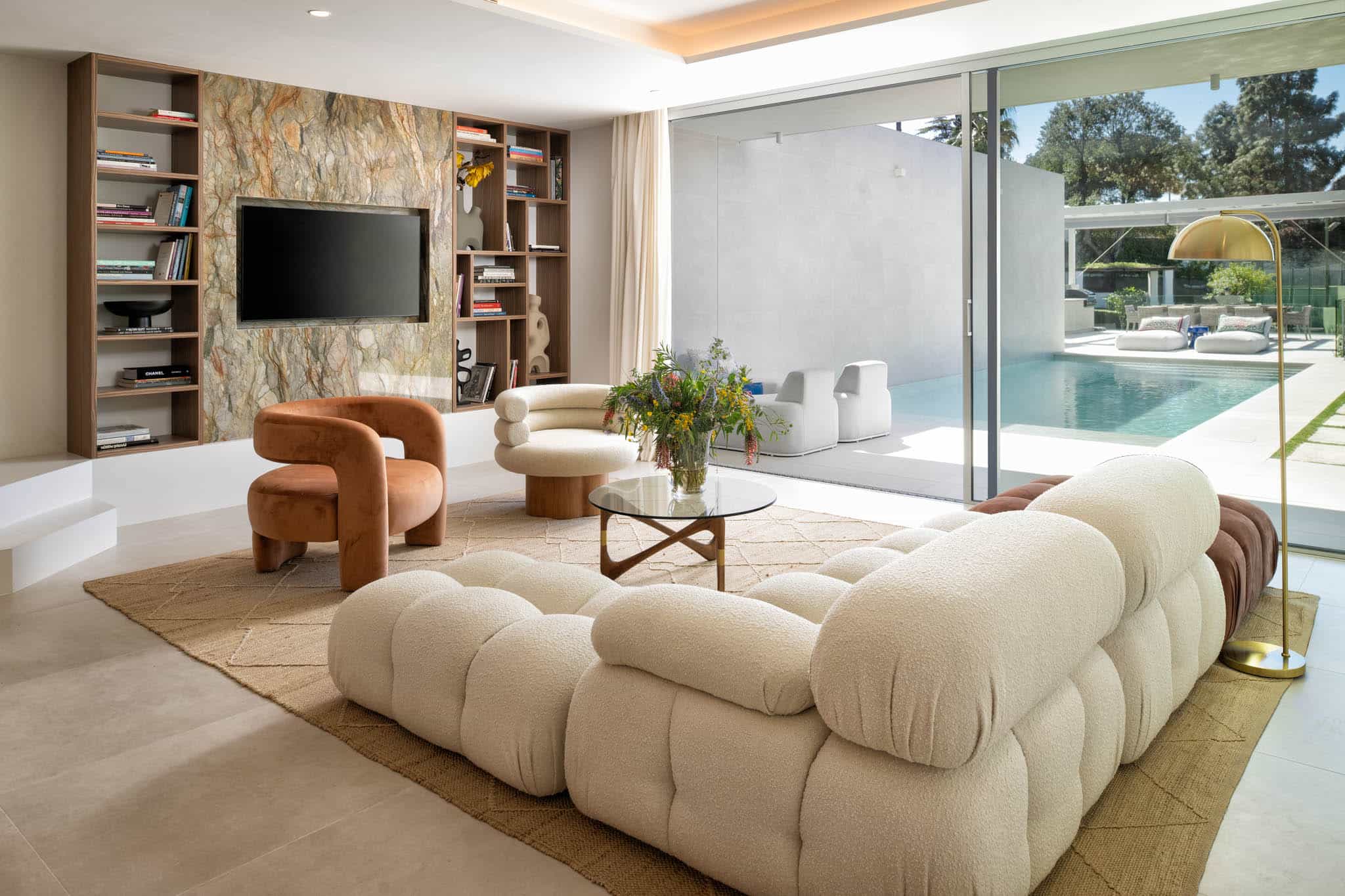
Renting your property long term in Spain means signing a residential contract of 12 months or more under the Ley de Arrendamientos Urbanos (LAU). It needs no tourist licence, it produces one predictable payment a month instead of forty separate stays, and on the Costa del Sol it is often the sensible answer for apartments in communities that have voted against holiday lets. Asking rents in Marbella now average €18.51 per square metre per month for apartments and €17.26 for houses, up roughly 5% year on year, so a 90 m² two-bed advertises at around €1,665 a month.
The trade-off is control. A long-term tenant holds statutory rights that a holiday guest never acquires, and the day you hand over the keys you commit to a legal framework measured in years rather than nights. That is worth understanding before you list, not after.
What does a long-term contract commit you to?
The LAU sets a minimum tenancy of five years where the landlord is a private individual, and seven years where the landlord is a company. You can write twelve months into the contract, but the tenant keeps the right to renew annually up to that ceiling. It is not something you can shorten by agreement, and a clause that tries to is simply unenforceable.
Two practical exits exist. You may recover the property for your own use, or for a first degree relative, after the first year, provided that right is stated in the contract and you give two months' notice. The tenant, in turn, may leave after six months with thirty days' notice, owing a proportional penalty only where the contract provides for one.
Treat five years as the real term, not twelve months. If you expect to sell or move in within two years, a long-term let is the wrong product for that property.
Annual rent reviews are indexed to the official reference index rather than set freely, so the opening rent you agree largely determines your income for the life of the contract. Pricing matters far more here than in a holiday let, where you can reprice every week.
What can you earn from a long-term let on the Costa del Sol?
Long-term gross income sits below a strong holiday-let year, but far more of it survives to your bank account. Across Málaga province apartments average €16.37 per square metre, while Marbella commands the premium at €18.51. Three things disappear from the cost line the moment a twelve month contract starts:
- Turnover costs. No cleaning between stays, no linen cycle, no consumables restock.
- Channel commission. Nothing is skimmed by a booking platform on every reservation.
- The winter gap. November to April is paid at the same rate as August, which is exactly the stretch where nightly lets in Estepona and Elviria thin out.
Utilities normally transfer to the tenant, and so does the day to day wear that a holiday operation absorbs weekly. At Premavista we manage 15 properties across Marbella, Benahavís and Estepona, and three of them now run on long-term contracts rather than nightly bookings. In every case the decision came from the building rather than the spreadsheet: community rules, a licence that was never going to be granted, or an owner who wanted the flat back each summer.
Demand is steadiest where a tenant has a practical reason to stay put. The Elviria and Las Chapas corridor east of Marbella rents well to families who need to be inside the school run of the English International College, and Nueva Andalucía draws remote professionals and winter residents who want Puerto Banús within ten minutes without paying August nightly rates.
Who pays the fees, the repairs and the deposit?
This is where most owner confusion sits, so the figures below are ours and they are fixed.
- Placement fee: one month's rent plus IVA, paid by the owner. Never by the tenant. It covers marketing, screening, the contract, deposit registration and the check-in.
- Optional full management: 10% of the monthly rent plus IVA, also paid by the owner. That is a different model from our short-let net commission, and the two should not be compared line for line.
- Deposit: one month's rent as the legal fianza, which must be registered with the Junta de Andalucía. Skipping that registration is a common and avoidable fine.
- Repairs: under Article 21 of the LAU the landlord keeps the home habitable, which covers structural work and the water, electricity, heating and gas installations. Small repairs arising from ordinary use fall to the tenant, and Spanish courts have generally read "small" as under €150 to €200.
- Standing costs: IBI, community fees and building insurance remain with the owner throughout.
You cannot raise the rent to recover the cost of a habitability repair. Keeping the property in good condition is a legal obligation, not a chargeable service.
How is the rent taxed if you do not live in Spain?
Non-resident landlords declare rental income on Modelo 210 under the IRNR. Residents of the EU or EEA pay 19% on net income after deducting mortgage interest, IBI, insurance, management fees, repairs and depreciation, pro-rated across the days the property was let. Residents outside the EEA pay 24% on gross rent with no deductions at all, which on a €1,665 monthly rent is a difference of several thousand euros a year.
From the 2026 tax year, declared in 2027, rental income is filed between 1 and 20 April under Order HAC/623/2026. Spain's National Court ruled in 2025 that the two-tier EU and non-EU treatment is discriminatory, so the split may not survive indefinitely, but it is the rule that applies to the return you file next spring. Keep every invoice: the deductions are only as good as your paperwork.
Is a long-term let right for your property?
It usually is when your community restricts holiday lets, when a tourist licence is unlikely, when the property sits away from the beach or the golf valley, or when you simply want to stop thinking about occupancy. It usually is not when your flat is a high-season performer with a licence already in hand and you want to keep using it yourself in July.
If you are weighing the two, the honest comparison is net annual income after costs and vacancy, not headline nightly rates. We will run both numbers for your specific property on our long-term rental management page, or you can send the details straight through the contact form. WhatsApp works too, on +34 600 543 173.