The best time to visit Marbella depends on what you want from your holiday. For warm beach days without peak-season crowds, May, June, September and October offer the ideal balance of sunshine, comfortable temperatures between 22 and 28 degrees Celsius, and significantly lower accommodation prices than July or August. That said, every month on the Costa del Sol has something going for it, and this guide breaks down exactly what to expect season by season. The next three months are covered in full detail below, with dates, and the rest of the year in brief.
What Is the Weather Like in Marbella Throughout the Year?
Marbella enjoys around 320 days of sunshine per year, which is one of the highest counts in mainland Europe. The Sierra Blanca mountains that rise behind the town act as a natural shield against cold northern winds, creating a microclimate that keeps temperatures mild even in winter.
In summer, expect highs of 29 to 31 degrees in July and August, dropping to comfortable mid-twenties by late September. Winter days typically reach 16 to 17 degrees, with lows rarely falling below 8 degrees overnight. Rainfall is concentrated between November and January, when the coast receives around 100mm per month, while the period from May through September is almost entirely dry, averaging less than 5mm of rain monthly.
The Mediterranean sea temperature ranges from 15 degrees in February to 24 degrees in August, making open-water swimming genuinely pleasant from June through October.
Marbella Month by Month: The Next Three Months
This section is updated every week and always covers the next three full months in detail, because those are the months people are booking. Right now that means October, November and December 2026. January moves into full detail at the end of October.
Marbella in October 2026
Marbella in October 2026 has three fixed dates worth planning around. Marbella 4Days Walking runs from 1 to 4 October, the 21st Marbella International Film Festival runs from 7 to 12 October, and the beach clubs close in the same fortnight, with Ocean Club Marbella on 3 October and Nikki Beach Marbella on 11 October. If you want a bed in town, aim for the first half of the month, because that is when Marbella is fullest. Nikki Beach calls its closer Endless Summer, running from 12:00 to 19:00 at the Hotel Don Carlos in Elviria, and it is the single busiest day of the month on Marbella's eastern side.
Marbella 4Days Walking is the 15th anniversary edition and the largest four-day walking event in Spain. Routes start in Marbella and run through the old town, the hills behind it and along the beach, in three tiers: 10 to 15 kilometres, 20 to 25 kilometres and 30 to 35 kilometres. Only 4,000 tickets are released, and Dutch and Belgian walkers take a large share of them. The White Party opens the week on Wednesday 30 September, the evening before the first route, and on the Saturday the afternoon party runs on into the Neon Party. If you are walking 30 kilometres a day, stay within reach of the start line rather than out in Elviria.
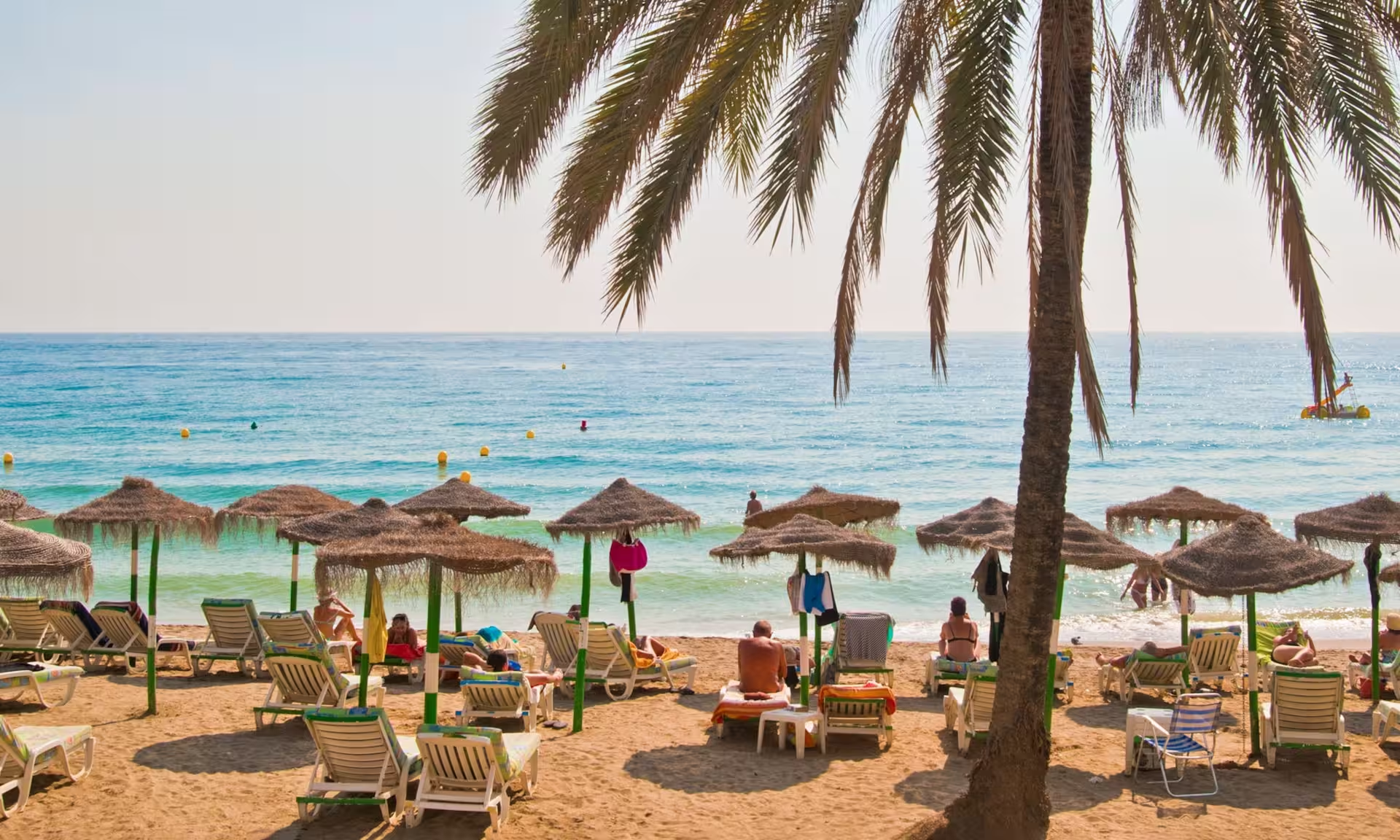
Is October still warm enough for the beach? Yes. Sea temperatures sit around 22 degrees through the month, and daytime highs hold in the mid twenties well into the final week. What changes is the crowd, not the weather. The chiringuitos stay open, the Paseo Maritimo is calm again, and you can get a table in Puerto Banus at places that were fully booked in August.
The Film Festival brings a different visitor to the August crowd: weekday arrivals, longer stays, little interest in day beds. For owners, October rewards pricing by the fortnight rather than the month. The first fortnight carries the walking event and the festival. The second half suits longer holiday stays and golf groups. Leave August rates in place all month and you lose the walkers. Drop to winter rates on 1 October and you give away festival week. The 21st edition runs red carpet premieres, a Pitch Your Vision competition and a gala dinner with the MIFF awards, and it fills weekday beds in the centre rather than weekend beds on the beach.
Marbella in November 2026
Marbella in November 2026 is the quietest genuinely good month of the year. Expect daytime highs around 19C, overnight lows near 13C, and a sea still holding about 18C. Rain falls on roughly nine days and totals around 57mm, which makes November the wettest month on this coast. So it is not beach weather. It is very good walking, golfing and eating weather, and prices drop sharply the week the October half term ends.
The usual pattern is several bright dry days, then one heavy burst of rain, then bright again. Bring a jacket for the evenings, when it drops into the low teens after dark. The upside is that everything inland is at its best. The hills behind Marbella are green again by mid month, which they have not been since April.
1 November is the Dia del Toston, and in 2026 it falls on a Sunday. Families take bags of chestnuts into the countryside and the town squares, roast them over open fires and drink anis. It is the most genuinely local day in the Marbella calendar, and none of it is staged for visitors. The mountain village of Ojen holds its own Toston Popular on the first Sunday after All Saints, which is 8 November in 2026, and it is worth the fifteen minute drive inland. After that the season moves indoors: the Teatro Ciudad de Marbella, a 480 seat municipal theatre in the centre, carries the autumn programme of theatre, music and flamenco once the beach clubs have closed.
November is the hinge month for owners. Short holiday stays thin out, and the guests who remain are golfers, walkers and northern Europeans escaping the first cold weeks at home. Premavista manages fifteen properties across Marbella, Benahavis and Estepona, and the ones that earn through winter have their winter rates, minimum stays and weekly discounts set before the end of November, not after Christmas. Owners who would rather step out of holiday letting altogether can move to a long-term let of 12 months or more, which needs no tourist licence.
Marbella in December 2026
Marbella in December 2026 is mild and bright rather than cold. Daytime highs sit around 17C, the sea holds near 16C, and the coast gets more winter sunshine than anywhere else on mainland Spain. It is not swimming weather, but it is comfortable enough to eat outside at lunchtime most days, which is the whole reason northern Europeans come here in December.
The season opens with the lights switch on in Marbella and San Pedro de Alcantara, which normally falls in the last days of November or on 1 December. Two Christmas markets then run through to Three Kings on 6 January: the municipal one spread across Alameda Park and Avenida del Mar, and a second at Plaza Antonio Banderas in Puerto Banus. San Pedro adds a smaller pre-Christmas market at Plaza de la Iglesia for a single weekend in the middle of the month. The illuminated botanical garden at Parque de la Represa runs on roughly the same dates as the municipal market, and the council's neighbourhood programme spreads free zambombas, living nativity scenes and street parades across the centre, San Pedro, Nueva Andalucia and Elviria.
The ayuntamiento had not published its 2026 Christmas dates as of 22 September 2026. The pattern above repeats every year and is safe to plan around, but the exact days are confirmed in mid November, and this guide is updated when they are.
Is December a good time to come? Yes, if you pick your fortnight. The two weeks either side of the Christmas and New Year spike are the cheapest fortnight of the entire year in Marbella, and the weather in those weeks is no different from the weather during the spike. The golf courses are in good condition, the old town is walkable again, and the restaurants that shut in November are open through the holidays.
For owners, December is two different products sold under one month. Christmas and New Year is a short, sharp, high-rate window that books early and rewards a minimum stay. The fortnights on either side are a different guest entirely, arriving for sun rather than for the holiday, and they are the ones lost by pricing the whole month off the peak. Price the two windows separately, and open the calendar for the quiet fortnights rather than closing them because the headline month looks soft.
The Rest of the Year in Brief
- January. The coldest month, highs 16 to 17C, sea around 15 to 16C. The Three Kings parade, the Cabalgata de Reyes, runs on the evening of 5 January and is the biggest family date of the Spanish winter. Long-stay rates are at their floor.
- February. Sea temperature bottoms out near 15C, but the almond blossom is out in the hills behind Istan and the days are frequently bright. Carnival falls in February or early March depending on the year.
- March. The golf season proper begins. Courses are in their best condition of the year and green fees carry shoulder-season discounts. Semana Santa falls in March or April depending on the year, and the processions through Marbella Old Town are among the most atmospheric in Andalucia.
- April. Reliably warm on land, still cold in the water. Good hiking month: the trails above Istan and around the Rio Verde valley are green and running with water.
- May. Arguably the best all-round month. Low to mid twenties, dry, and rental rates roughly 40% below August for near-identical daytime weather. The last two weeks are the pick of it.
- June. The sea becomes properly swimmable. Marbella's own feria, the Feria de San Bernabe, honours the town's patron saint around 11 June and runs for several days of daytime and night-time festivities. The first two weeks are the "golden window" before peak pricing starts.
- July. Peak season begins. Highs of 30C, the Starlite Festival running at the Cantera de Nagueles, minimum stays of five to seven nights, and nightly rates 40 to 60% above shoulder season.
- August. The busiest and most expensive month, and the one where the A-7 between San Pedro and Marbella centre is genuinely slow at weekends. Sea at 24C, its warmest. Book months ahead or do not book at all.
- September. Warm and noticeably quieter, highs around 25.8C and a sea still near 22C, with light rain of roughly 16mm over six days. The August crowds thin from the first week. The better half of the Costa del Sol summer, and the month where a listing left on July rates loses the guests who plan ahead.
Spring and Autumn: The Sweet Spot
If you are flexible on dates, spring (April to early June) and autumn (September to October) are when Marbella is at its best. Temperatures sit comfortably in the low to mid-twenties, restaurant terraces along the Paseo Maritimo are busy but not packed, and you can walk through Marbella Old Town without jostling for space on the narrow streets around Plaza de los Naranjos.
These shoulder months are also when you get the best value on holiday rentals. A two-bedroom apartment in Nueva Andalucia that commands over 200 euros per night in August can often be booked for 120 to 140 euros in May or October. At Premavista, we see occupancy rates of around 65% annually across our managed properties, but the guests who book during shoulder season consistently leave the best reviews because the experience is more relaxed.
Spring is particularly good for:
- Golf: La Quinta Golf in Benahavis and the courses around Aloha run deals from March through May
- Hiking: The trails above Istan and around the Rio Verde valley are green and flowing with water
- Local festivals: Semana Santa processions in Marbella Old Town are among the most atmospheric in Andalucia
Is Summer Worth the Crowds?
July and August bring peak season in every sense. Temperatures regularly hit 30 degrees, Nikki Beach and the chiringuitos along the Golden Mile are at full capacity, and the marina at Puerto Banus buzzes well past midnight. If you enjoy that energy, summer is hard to beat.
The trade-off is cost and availability. Nightly rates for quality short-term rentals climb 40 to 60% above shoulder-season prices, and the most popular properties book out months in advance. Expect minimum stays of five to seven nights from most hosts between mid-June and early September. Traffic on the A-7 between San Pedro and Marbella centre slows considerably, especially on weekends.
A practical tip: the first two weeks of June and the last two weeks of September offer nearly identical weather to peak summer but at a fraction of the price and a fraction of the traffic. Locals call these the "golden windows" for good reason.
What About Visiting Marbella in Winter?
Winter on the Costa del Sol is mild by northern European standards and increasingly popular with remote workers and long-stay visitors. Daytime temperatures of 15 to 17 degrees mean you can comfortably eat outdoors at lunch, and many days are bright and sunny even in January.
The coast takes on a different character between November and February. The Sunday market at San Pedro de Alcantara is a local affair rather than a tourist attraction, and you can get a table at Casanis or Skina without booking weeks ahead. Rental prices drop to their lowest point of the year, making it an attractive option for month-long stays.
Winter does have a few drawbacks. The sea is too cold for most swimmers (around 15 to 16 degrees), some beach restaurants close from November through March, and you will see rain roughly eight to ten days per month during the wettest period. But if your priority is mild weather, low prices and a quieter pace, it works well.
How to Choose the Right Month for Your Trip
Here is a quick decision framework based on what matters most to you:
- Best weather with fewest crowds: Late May or early October
- Best for families: June or September, when schools in Spain are still in session but the weather is already warm
- Best for nightlife and events: July and August, especially around the Starlite Festival at the Cantera de Nageles
- Best value: November through February, with the exception of the Christmas and New Year fortnight
- Best for golf: March through May, when courses are in top condition and green fees include shoulder-season discounts
Whatever month you choose, booking a professionally managed holiday rental gives you more space and privacy than a hotel at a comparable price point. Premavista manages properties across Marbella, Estepona and Benahavis with in-person check-ins and local support throughout your stay.
Ready to start planning? Browse our available properties or get in touch directly on WhatsApp at +34 600 543 173.